Baritone Fingering Chart
This baritone fingering chart shows the valves for every note on B♭ baritone horn, in bass clef or treble clef, plus marching baritone. Tap a note to see the fingering and hear how it should sound.
Note
Open (no valves)
Open. The center of the baritone sound.
Keyboard of every note on this chart. Use the note list or arrow keys instead if you prefer.
Instrument type
Notes shown
Options
Play a scale
Alternate fingerings for F3
None in common use. Use the main fingering above.
All baritone fingerings (low E to high B♭ and above)
Every note on one page. Tap a note to hear it and load it into the tool above. Black means pressed or covered.
Low registerE2–B2
Middle registerC3–B3
Upper registerC4–F5
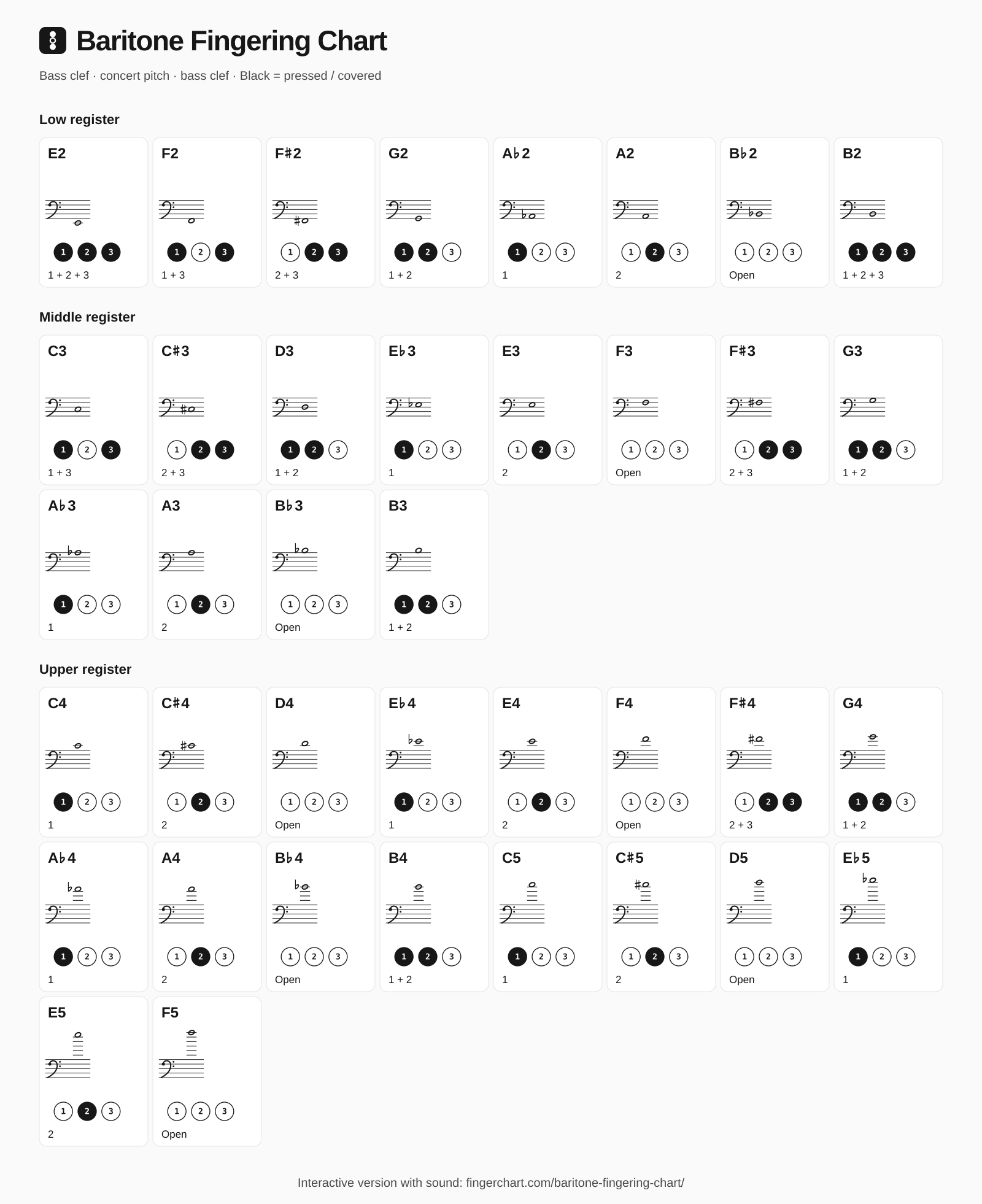
How to read this baritone fingering chart
Each box shows a note and the valves to press. Filled circles are pressed. “Open” means no valves. The chart defaults to bass clef, where the note on the page is the note you hear. Switch to Treble clef or Marching baritone above the tool to see the written note for treble clef parts.
Baritone fingerings for beginners
| Concert note (bass clef) | Treble clef written | Valves |
|---|---|---|
| B♭ | C | Open |
| C | D | 1 + 3 |
| D | E | 1 + 2 |
| E♭ | F | 1 |
| F | G | Open |
| G | A | 1 + 2 |
| A | B | 2 |
| B♭ | C | Open |
1+3 (low C) and 1+2+3 (low E and B) are sharp on a three-valve baritone. Lip those notes down slightly, or follow your director’s advice.
Marching baritone fingering chart
A marching baritone is a B♭ baritone with a front-facing bell, usually read in treble clef. Its valves work exactly like a concert baritone’s, so use the Marching baritone setting in the tool or read the treble clef column above. A few older marching instruments were pitched in G; check the stamp on the bell if your notes sound wrong.
On the field:
- Keep the leadpipe steady against your lips while you march; let your arms absorb the steps.
- Support with more air than you would sitting down. Outdoors, sound disappears fast.
Treble clef vs bass clef baritone
Bass clef baritone is at concert pitch. Treble clef baritone is written a major ninth higher and fingered like a trumpet. Both are correct; they are just two ways of writing the same instrument. Many school bands use treble clef for marching and bass clef for concert band.
Baritone Fingering Chart FAQ
Is a marching baritone fingering chart different?
Modern marching baritones are pitched in B♭ and use the same three-valve fingerings as a concert baritone. Most marching parts are in treble clef, so they read like trumpet fingerings. Choose Marching baritone in the tool to see them.
What are the baritone notes for beginners?
In bass clef, beginners usually learn B♭ (open), C (1+3), D (1+2), E♭ (1), F (open), G (1+2), A (2) and B♭ (open). The Beginner view shows just those notes.
Do baritone fingerings change between treble and bass clef?
The valves for each sound stay the same, but the written note changes. Treble clef baritone parts are written a major ninth above concert pitch, so written C (open) sounds concert B♭.
Can a trumpet player read treble clef baritone?
Yes. Treble clef baritone uses the same fingering as trumpet for each written note, one octave lower in sound. That is why many trumpet players switch to baritone in marching band.
What is the difference between baritone and euphonium?
Both are B♭ and share fingerings. The baritone usually has a narrower bore, a brighter sound and three valves; the euphonium is wider and usually has four. The euphonium chart covers the 4th valve.
Related charts
Last updated .How we verify fingerings