Flute Fingering Chart
This flute fingering chart shows every note on the flute, from low C through the third octave to high C. Tap a note to see which keys to press and hear how it should sound.
Note
Left thumb (B key), left hand 1-2-3 and right pinky E♭ key
Keyboard of every note on this chart. Use the note list or arrow keys instead if you prefer.
Notes shown
Options
Play a scale
Alternate fingerings for G4
None in common use. Use the main fingering above.
All flute fingerings (low C to high C, three octaves)
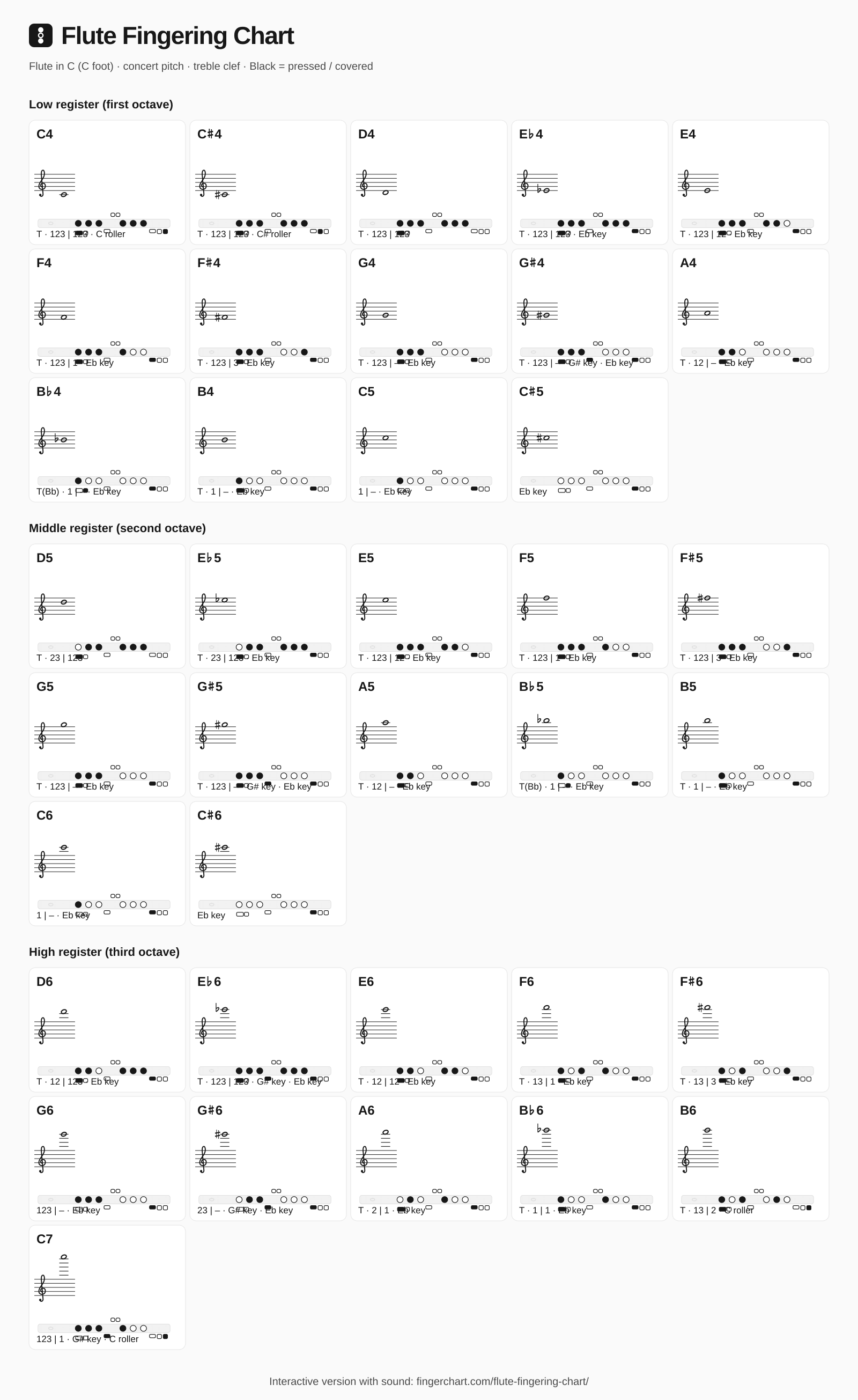
Every note on one page. Tap a note to hear it and load it into the tool above. Black means pressed or covered.
Low register (first octave)C4–C♯5
- C4Left thumb (B key), left hand 1-2-3, right hand 1-2-3 and right pinky C roller
- C♯4 / D♭4Left thumb (B key), left hand 1-2-3, right hand 1-2-3 and right pinky C♯ roller
- D4Left thumb (B key), left hand 1-2-3 and right hand 1-2-3
- E♭4 / D♯4Left thumb (B key), left hand 1-2-3, right hand 1-2-3 and right pinky E♭ key
- E4Left thumb (B key), left hand 1-2-3, right hand 1-2 and right pinky E♭ key
- F4Left thumb (B key), left hand 1-2-3, right hand 1 and right pinky E♭ key
- F♯4 / G♭4Left thumb (B key), left hand 1-2-3, right hand 3 and right pinky E♭ key
- G4Left thumb (B key), left hand 1-2-3 and right pinky E♭ key
- G♯4 / A♭4Left thumb (B key), left hand 1-2-3, left pinky G♯ key and right pinky E♭ key
- A4Left thumb (B key), left hand 1-2 and right pinky E♭ key
- B♭4 / A♯4Left thumb on the B♭ lever, left hand 1 and right pinky E♭ keyAlt: Left thumb (B key), left hand 1, right hand 1 and right pinky E♭ key
- B4Left thumb (B key), left hand 1 and right pinky E♭ key
- C5Left hand 1 and right pinky E♭ key
- C♯5 / D♭5Right pinky E♭ key
Middle register (second octave)D5–C♯6
- D5Left thumb (B key), left hand 2-3 and right hand 1-2-3
- E♭5 / D♯5Left thumb (B key), left hand 2-3, right hand 1-2-3 and right pinky E♭ key
- E5Left thumb (B key), left hand 1-2-3, right hand 1-2 and right pinky E♭ key
- F5Left thumb (B key), left hand 1-2-3, right hand 1 and right pinky E♭ key
- F♯5 / G♭5Left thumb (B key), left hand 1-2-3, right hand 3 and right pinky E♭ key
- G5Left thumb (B key), left hand 1-2-3 and right pinky E♭ key
- G♯5 / A♭5Left thumb (B key), left hand 1-2-3, left pinky G♯ key and right pinky E♭ key
- A5Left thumb (B key), left hand 1-2 and right pinky E♭ key
- B♭5 / A♯5Left thumb on the B♭ lever, left hand 1 and right pinky E♭ keyAlt: Left thumb (B key), left hand 1, right hand 1 and right pinky E♭ key
- B5Left thumb (B key), left hand 1 and right pinky E♭ key
- C6Left hand 1 and right pinky E♭ key
- C♯6 / D♭6Right pinky E♭ key
High register (third octave)D6–C7
- D6Left thumb (B key), left hand 1-2, right hand 1-2-3 and right pinky E♭ keyBeing checked
- E♭6 / D♯6Left thumb (B key), left hand 1-2-3, right hand 1-2-3, left pinky G♯ key and right pinky E♭ keyBeing checked
- E6Left thumb (B key), left hand 1-2, right hand 1-2 and right pinky E♭ keyBeing checked
- F6Left thumb (B key), left hand 1-3, right hand 1 and right pinky E♭ keyBeing checked
- F♯6 / G♭6Left thumb (B key), left hand 1-3, right hand 3 and right pinky E♭ keyBeing checked
- G6Left hand 1-2-3 and right pinky E♭ keyBeing checked
- G♯6 / A♭6Left hand 2-3, left pinky G♯ key and right pinky E♭ keyBeing checked
- A6Left thumb (B key), left hand 2, right hand 1 and right pinky E♭ keyBeing checked
- B♭6 / A♯6Left thumb (B key), left hand 1, right hand 1 and right pinky E♭ keyBeing checked
- B6Left thumb (B key), left hand 1-3, right hand 2 and right pinky C rollerBeing checked
- C7Left hand 1-2-3, right hand 1, left pinky G♯ key and right pinky C rollerBeing checked
How to read this flute fingering chart
The diagram shows the flute the way you hold it, head joint on the left.
- Circles are the main keys for the first three fingers of each hand. Filled means pressed.
- The thumb keys are drawn under the left-hand keys. The larger one is the B key; the small one is the B♭ lever.
- Small keys above the body are the two trill keys. The keys at the far right are for the right pinky: E♭ key, then the C♯ and C rollers on the foot joint.
Flute reads treble clef at concert pitch, so the written note is the note you hear.
Flute fingering chart for beginners
| Note | Fingering | Tip |
|---|---|---|
| B♭ (middle) | Thumb on B♭ lever, left 1, E♭ key | |
| A | Thumb, left 1-2, E♭ key | |
| G | Thumb, left 1-2-3, E♭ key | |
| C (third space) | Left 1, E♭ key | Thumb off |
| F | Thumb, left 1-2-3, right 1, E♭ key |
Flute high notes: the third octave
The first and second octaves mostly share fingerings; you change the air, not the fingers. The exceptions are D and E♭ in the second octave, where the left index finger lifts. The third octave, from D above the staff, uses different fingerings that vent one or more holes. Fingerings up there vary slightly between flutes, so treat the chart as a starting point and listen to the tuning.
Alternate flute fingerings
Turn on Alternates in the tool to see them. The most common is the “one and one” B♭: thumb on the B key, left 1 and right 1. Use it when the passage also has B natural or F♯.
Flute Fingering Chart FAQ
What are the flute notes for beginners?
Most band books start flute players on B♭, A and G in the staff, then add C, F and the notes below. B♭ uses the thumb B♭ lever and the first finger; A uses the thumb and two fingers; G uses the thumb and three fingers. The Beginner view shows these first notes.
Why is the right pinky down on almost every flute note?
The right pinky holds the E♭ key open for almost every note. It vents the sound and helps you balance the flute. The main exceptions are low D, the second-octave D, and the very lowest notes, which use the foot-joint rollers.
How do you play flute high notes in the third octave?
Third-octave notes use their own fingerings, usually with one or two fingers vented, plus faster, more focused air. Aim the air slightly higher and keep your lips relaxed. Check the high register section of the chart.
What is the thumb B♭ on the flute?
The left thumb can sit on the B♭ lever instead of the B key, which turns the B fingering into B♭. It is the easiest B♭ in flat keys. Move the thumb back to the B key when you need B natural.
What is the difference between a C foot and a B foot flute?
A C foot goes down to low C. A B foot adds one more key for low B and helps some high notes. This chart is for the standard C foot, which most student flutes have.
Related charts
Last updated .How we verify fingerings